How it works
How a BNB block hash becomes a universe
BNB Chain closes a new block in under a second. The block hash is 32 bytes that nobody chose. BNBBANG reads those bytes as the physical constants of a universe and runs that universe from the first instant to heat death. Most of them die. This page explains each step.
1. Thirty-two bytes nobody picked
A block hash is the output of a hash function over the block's contents. It is fixed the moment the block is sealed, it is public, and no single party controls what it looks like. That is exactly what you want from a source of universes: the same hash always produces the same universe (determinism), and nobody can order a nicer one (no selection).
The site takes a block by latest, genesis, random, a height you type, or a hash you paste. It does not search by date. If you want the block from a day that matters to you, look up that day's height on BscScan and paste the height.
2. From bytes to 23 constants
The 32 bytes are expanded by an integer-only derivation (open source, bnbbang-engine) into 23 parameters. Each parameter has a physical range and is scaled around our own universe's value, so a random hash lands "near us" more often than far away, but not always near enough.
| Group | Parameters | What they decide |
|---|---|---|
| Couplings and masses | fine-structure constant α, strong coupling αₛ(M_Z), Higgs vev and mass, electron mass, up and down quark masses, θ_QCD, sum of neutrino masses, CKM phase, number of particle generations | Whether atoms are stable, whether protons outlive the universe, whether nuclear fusion has a path to carbon |
| Cosmology | Hubble constant H₀, baryon density Ω_b h², cold dark matter density Ω_c h², dark energy Ω_Λ, primordial amplitude A_s, spectral index n_s, curvature Ω_k, CMB temperature | Whether the universe recollapses, rips apart, or expands quietly; whether structure can grow before it is diluted |
| Geometry and gravity | spatial dimension D (emerges from a string-gas model with three parameters: initial temperature, winding density, compactification stiffness), gravitational coupling ratio G_r/(ħ_r c_r) | Whether orbits and atomic ground states are stable at all (they are not for D ≥ 4), how heavy stars must be to ignite, how long they burn |
The parameter table, ranges and references live in engine/params.js. Nothing on this page is a metaphor: the same code runs in your browser, on the server, and in the verification tool.
3. Running the universe
With the constants fixed, the engine walks the standard sequence and asks a yes/no question at each stage:
- Inflation and geometry. Does space end up with three large dimensions? With D ≥ 4 there are no stable orbits and no stable atoms; with D ≤ 2 there is no Newtonian attraction.
- Expansion history. Does the universe recollapse (Big Crunch), tear itself apart, or expand forever?
- Nucleosynthesis and atoms. Do protons survive, do electrons bind, do nuclei form?
- Structure. Are the primordial fluctuations large enough to grow galaxies, but not so large that everything collapses into black holes first?
- Stars. Is there a mass window in which fusion ignites, and do stars live long enough?
- Chemistry. Does the triple-alpha process produce carbon and oxygen; is there a liquid-water window?
- Time. Is there enough of it, before heat death, for observers to appear?
The first "no" ends the run and names the outcome. The whole run takes milliseconds.
4. The twelve endings
Every universe gets exactly one of these verdicts. The list matches the contract's outcomeName() one-to-one. Where we have found a real mainnet block with that ending, the card is shown; click through to see the full parameter set.
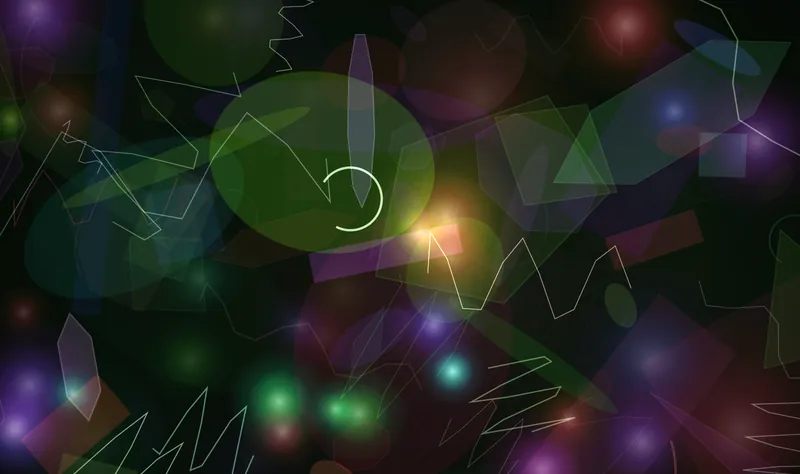
Space did not settle into three dimensions. Orbits and atomic ground states are unstable; matter oscillates between collapse and escape. By far the most common ending.
Examples: block #98,310,038 (D = 16) · block #32,588,805 (D = 9)

Expansion stops and reverses. Everything is compressed back into a point before anything interesting has time to happen.
Example: block #39,053,908 (grade A)
Phantom dark energy (w < −1) tears structures apart. Not reachable with the current parameter ranges; kept so the contract's outcome list stays complete.
Not reachable in this parameter set.

An almost perfectly uniform gas that only dilutes and cools. Fluctuations were too small for anything to clump.
Example: block #113,561,630 (grade A)

Fluctuations were too large. Clumps collapse into horizons before they can cool into galaxies.
Example: block #115,371,386 (grade A)

No baryons, or protons decay, or electron shells cannot bind. Light and particles, but nothing that holds together.
Example: block #77,884,022 (grade A)

Atoms and light exist, but there is no carbon, no hydrogen, or no rigid molecules. Nothing to build with.
Example: block #16,196,174 (grade A)
Galaxies form, but no star ever ignites: the fusion mass window is empty.
No example found yet in 1,840 random blocks.

Stars, planets and chemistry are all there, but there is not enough time, or not enough of a stage, before the lights go out.
Example: block #24,620,313 (grade A)
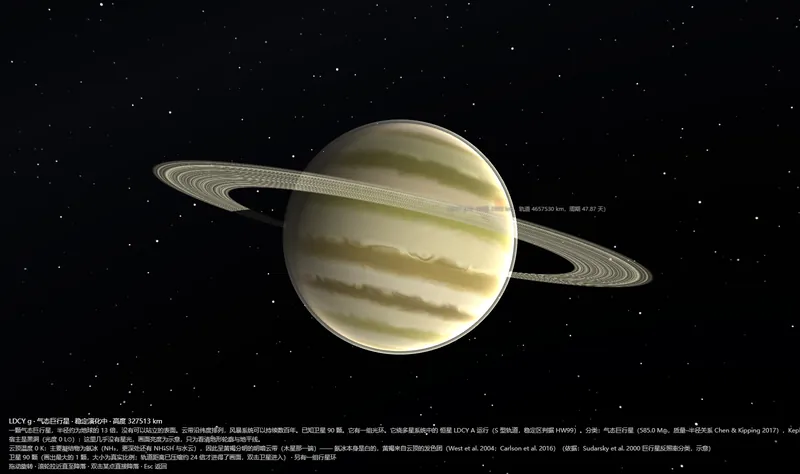
Galaxies, stars, planets and chemistry are all present, and there is enough time. The rare one: roughly one block in fifteen to thirty.
Examples: block #24,309,506 · block #104,883,548

Stars and chemistry exist, but the triple-alpha process cannot make carbon or oxygen, or there is no liquid-water window.
Example: block #119,548,165

The dimension came out fractional or otherwise off three. The nucleosynthesis, star and chemistry formulas only hold for D = 3, so the remaining numbers are extrapolations, and the engine says so.
Example: block #69,395,384 (D = 3.5)
5. Grades
The grade is decided by the outcome and the dimension only. It does not change the mint reward: every mint issues the same 600 BANG, so there is nothing to gain by scanning for a grade.
| Grade | Rule |
|---|---|
| S | Observers possible |
| A | Exactly three spatial dimensions, but observers are not possible |
| B | Another integer dimension (2, 4, 5 …) |
| C | A fractional dimension |
| D | Dimension of one or less, or no dimension could be derived |
6. What a random sample looks like
On 2026-09-02 we drew 1,600 random mainnet block heights (a fixed pseudo-random seed, so anyone can repeat the draw) and ran the engine on each hash:
| Outcome | Blocks | Share |
|---|---|---|
| Unstable orbits | 1,509 | 94.3% |
| Observers possible | 62 | 3.9% |
| Beyond model (D≠3) | 11 | 0.7% |
| No atoms | 5 | 0.3% |
| No carbon chemistry | 4 | 0.3% |
| Heat death, no structure | 3 | 0.2% |
| Big Crunch | 2 | 0.1% |
| Black hole dominated | 2 | 0.1% |
| No chemistry | 1 | 0.1% |
| Stars but no life | 1 | 0.1% |
A smaller draw of 240 blocks gave 8 observer universes (3.3%), and an earlier one of 104 gave 7 (6.7%). The exact share moves with the sample; the shape does not: more than nine in ten universes never get past their first second, and a few percent grow something that could look back.
You do not have to trust these numbers. Clone the engine, point it at any hash, and count for yourself. The verification page lists the commands.
7. One hash, one universe, one owner
Detonating is free and happens off-chain; no wallet is needed to look. If you want to keep a universe, you mint it: the NFT contract stores tokenOfHash, and a second mint of the same block hash reverts. The first confirmed transaction owns it. The hard cap is 1,707,000 universes; BNB Chain has well over a hundred million blocks, so fewer than 1.5% of them will ever be minted. The rest stay free to look at, with no owner.